How to get list of constraints in PostgreSQL?
In PostgreSQL, the “\d” command and “pg_catalog” schema are used to get the list of table constraints. The “\d” command must be used along with the table name to list the table constraints. While the “pg_catalog” schema can be used with the “pg_constraint” and “pg_class” views to get the list of table constraints.
How to check if a constraint exists in PostgreSQL?
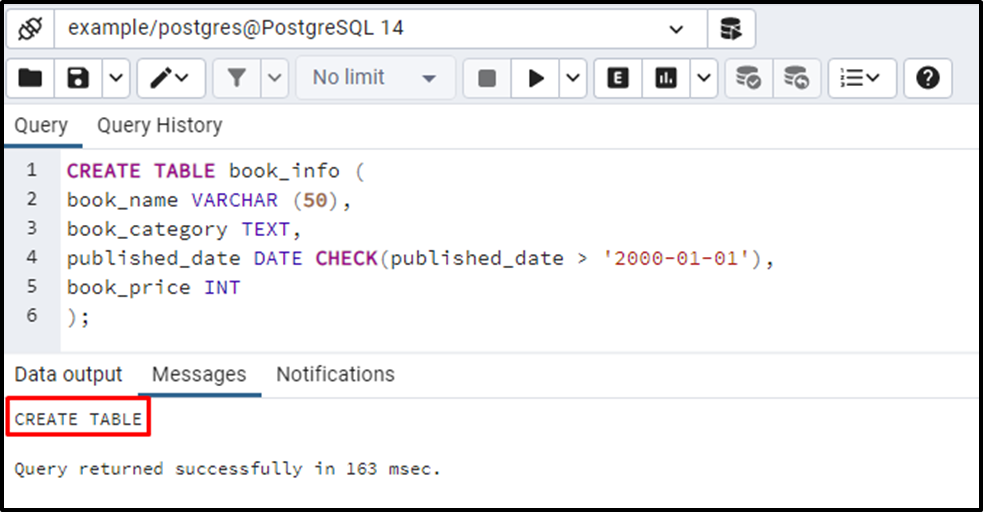
Introduction to PostgreSQL CHECK constraints
- First, specify the constraint name after the CONSTRAINT keyword. This is optional. If you omit it, PostgreSQL will automatically generate a name for the CHECK constraint.
- Second, define a condition that must be satisfied for the constraint to be valid.
How to add multiple constraints in PostgreSQL?
Of course, a column can have more than one constraint. Just write the constraints one after another: CREATE TABLE products ( product_no integer NOT NULL, name text NOT NULL, price numeric NOT NULL CHECK (price > 0) ); The order doesn't matter.
How to add a not-null constraint in PostgreSQL?
To add a not-null constraint, which cannot be written as a table constraint, use this syntax: ALTER TABLE products ALTER COLUMN product_no SET NOT NULL; The constraint will be checked immediately, so the table data must satisfy the constraint before it can be added.
Constraints give you as much control over the data in your tables as you wish. If a user attempts to store data in a column that would violate a constraint, an …
Constraints are the rules enforced on data columns on table. These are used to prevent invalid data from being entered into the database.
Constraints are used to enforce rules on the data of columns. These are defined primarily to ensure correctness and validity of the data entering into the …